Showing posts with label book review. Show all posts

Wednesday, June 25, 2025

Book Review: "Baking Across America: A Vintage Recipe Roadtrip", by B. Dylan Hollis


I’ve read A Lot of cookbooks. Whether because I’m researching, reviewing, or even just bored, there’s always something that separates the better and the best. It’s not usually the recipes, the pictures, or even the quality of the volume itself- it’s the theming. A solid modern or contemporary cookbook shows itself best where every page leads organically into the next. Where each recipe has its place both in the section, the book, and even the genre. While I know a good number, it’s still not a common thing, and so I always make a note.

That damn TikTok twink did it twice in a row!

In an impressive first publication, B. Dylan Hollis debuted with Baking Yesteryear, in which he offers a rich historical account of 20th century American food decade by decade alongside no small amount of recipes from each- including a hilariously awful Worst Of The Worst chapter at the end, because where there are recipes, there are inevitably bad recipes, and whoooo boy did he ever find some clunkers.

Here in his second book Baking Across America, however, we have something very different yet also very familiar. "Baking Across America" does exactly what it says it does. It’s a journey through the U.S., region by region and state by state in search of what might be called the Defining Specialties of each and every one. Now how Dylan went about this is both very clever and very appropriate. Hundreds upon hundreds of cookbooks from every nook and cranny of every last place, and as local as can be- you name the obscure or local organization, he probably found something. Then to scour each and every one looking for recipes and concepts in common, narrowing things down with some quite thorough historical research until there was little if any real doubt about the notions.

There are some (even many) recipes that might raise an eyebrow at first look. My home state of New Jersey is, for example, poleaxed via the alchemical marvel that is the Tomato Soup Cake. Yes, really. And yes, it’s actually rather tasty. No, don’t ask me to explain the why of it here, the chemistry is complex and exhausting. 

BUT! 

The research bears out most each and every recipe ultimately featured here- they’re eminently defensible. Of the ones I couldn’t vouch for offhand, I even did some digging of my own to be sure. Each is introduced with an air of playful, generous fondness. All throughout this book, the recipes are portrayed as so much more than lists of ingredients and instructions. They’re comrades; they’re guides into myriad communities of all shapes and sizes as much as they’re tributes to those who came before and brought those recipes to the modern day one generation at a time. It’s a comprehensive collection that speaks to any number of cultural backgrounds, niche ingredients, and historical minutiae.

If I had a complaint about anything at all in this book, there’s really only one thing that jumps out... or, rather, shies away. For a book so massive, so bombastic in its method, pictures and prose, the text itself is what I found troublesome- the font’s just too damn small! Nearly every recipe fits neatly to a single page, and every last iota of additional space is chock-full of fantastic, brilliantly colorful, largely timeless photographs. While they absolutely do their job highlighting most every facet of every region of the US, I can’t help but wish for a few fewer photos and a larger, more legible font. Now I suppose that if you, like myself and many others, can hear Dylan reading the text aloud in your head as you peruse the thing, it’s going to be more than loud enough to make up the difference. The book’s story is told in no small part by the pictures- America is a bright, colorful, diverse, and VERY BUSY place. The endless array of excellent and nearly overwhelming photography works to emphasize precisely that, and does so while riding the edge of being gratuitous… but not going over.

So, to recap: gorgeous book, rock-solid concept, and superbly executed; but the font is small enough to make rapid read-throughs and referencing more difficult than a cookbook of this caliber ought to be. If you like the concept, the food, or the man himself, you’ll have a great time with Baking Across America. If you want fantastic photos, a plethora of well-researched history lessons, or even just a really pretty coffee table book, you’ll love it too.

I’ll recommend it without reservation.


Monday, May 26, 2025

As if I didn't have enough unqualified and overappreciated nonsense to deal with.


I was recently reminded of one of the most infuriating and degrading experiences of my life. Beginning, of course, with someone asking for my help. What they wanted was for me to acclimatize a friend of theirs to what might be experienced as everyday food in Japan. Apparently the subject was considering a trip. 

Then I found out who it was.

I'd introduced this same person to a variety of new foods in the previous months when they would drop by to visit my current housemates and dinner happened to be near. I was never told about incoming guests, of course, but an extra plate is nothing- there are always leftovers when cooking for a full house.

Now, when I say 'new foods', I'm not talking nonwestern exotics like Jollof Rice or Lamb Vindaloo.

I'm not talking Euro classics like a simple risotto or a baked Brie en croute.

We're talking things like... Oven-baked fish, topped with parsley and breadcrumbs.


Broccoli, gently roasted, with a pat of butter.


Corn. 


Corn.


The difference between dino nuggets and karaage was apparently already too much.

I gave it due consideration, and then flat out refused.

You couldn't possibly pay me enough to make it easier to inflict such a culinarily-crippled menace on Japan. For starters, Japan is in general... less than kind to individualists. "The nail that sticks out gets hammered back down" was a common turn of phrase in my East Asian Studies undergrad classes.  There is nothing about this person that could possibly thrive there. Something personal- it's a place I've been trying to go for literal decades, and have had the opportunity ruined for me many times over. I will absolutely not help someone enjoy a luxury they're not even capable of qualifying for when someone like me keeps getting snubbed and sloughed off.

The hazardous someone in question is an adult. Somewhere in their mid to late twenties, and that grew up here in the US- in the midwest, no less. Though "grew up" is one hell of a reach in a case like this. 

The approach and experience is infantile, and the timing decades out of date. How does one near thirty without awareness and comfort of basic fundamentals of a western diet? Stuff you see in the canned goods aisle and the freezer case all year round? Or that you see in most TV dinners?

That, and more, was what comes to mind when I saw this.

A new cookbook: "COLOR TASTE TEXTURE: Recipes for Picky Eaters, Those with Food Aversion, and Anyone Who's Ever Cringed at Food".

In some ways, to some people, it might be seen as a step in the right direction. Not to me. 

You're not supposed to make things easier for difficult people. You're supposed to make better people.

Wednesday, March 19, 2025

Book Review: "The Fortune Cookie Chronicles", by Jennifer 8 Lee


Back when I first penned this review, I decided I'd keep it simple- The Fortune Cookie Chronicles turned out to be an excellent book. It strives to answer some of the most common questions that come up when "Chinese Food" is a topic of conversation. As it happens, that's rather a lot, being that there are more Chinese restaurants in America than any two fast food chains combined.


Little factoids like that (Or that the 8 in her name is deliberate, but not for shock value- 8’s a lucky number in China.) are sprinkled all through the book- tidbits of passing interest backed up by research, and deftly tucked into the narrative. The storytelling laid beside the bald facts is poignant, stirring, and leaves definitive impressions at various levels of depth. Equal parts reporting, blog post, vignette, and amateur food critic, each section gives answers and information that not only serves to bolster your current understanding, but compound it as you read on. You'll think back as you near the end of the book and absentmindedly apply bits of info from the beginning to form a more complete picture. That's not as easy a trick to pull off as it sounds, considering your average college textbook. Likewise, it isn't something I say lightly.

Full disclosure though, a drafted manuscript that used similar research to address several of the book's major topics was sitting on my harddrive when this book came out. Jennifer beat me handily to getting things published (benefits of being a journalist and reporter rather than a chef I suppose), but in hindsight I don't mind a bit. She did an excellent job from start to finish.  Not speaking Mandarin or Cantonese myself, her net was a wider cast than mine, and I was very pleased at the surpassing thoroughness of her efforts- though some of my contacts in Japan might have been useful to her. Her list of notes and bibliographical references is also quite comprehensive- for those with a scholarly bent, that section alone is worth digging into. She's done a LOT of legwork, dredging up old manuscripts, translations, even court documents detailing the struggle of Asian-Americans to find citizenship and some measure of stability here in the United States. These days, I have to wonder how many more new versions of the very same struggles are going to be written and referenced in the months and years to come as the nation backslides into horrors thought banished for good.

There's one major problem with reviewing a manuscript as well constructed as this- most every enticing soundbite and succinctly distilled phrase has already found its way onto either the cover or the dust jacket.

So- if you've ever wondered who General Tso was, or why his chicken seems to be everywhere. If you're Jewish, and have memories of Chinese food every December around Christmas. If you've ever wondered where that Chinese Takeout Box came from, how the fortune cookie came about, or who wrote all those fortunes, or ever played the lucky numbers on the back. Any of that, plus all sorts of other satisfied curiosities work together to let me recommend this book with some real enthusiasm.

Saturday, March 15, 2025

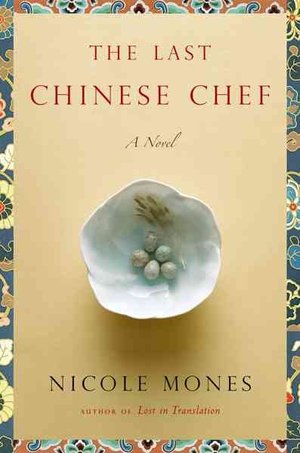
Book Review: 'The Last Chinese Chef', by Nicole Mones


How do you distill the culinary essence of 5000 years of history into a single short book?

<= Kinda like this. Note the cover blurb by Ruch Reichl- which at the time was shorthand for people in food media to take the book somewhat seriously, and to help goad dabblers into a purchase. (The other cover, seen below, is better.)

The Last Chinese Chef is one of those books where even if you don't know a thing about the subject matter to start, you will by the end. Moreso, you'll likely be grateful for it. The more you know to start with though, the better you'll probably like it. I'm definitely a fan of this approach, which the book handles well- I would recommend it to anyone who has a care for the relationship between food and culture, food and family, or food and more food! In that way it's a lot like a Fuschia Dunlop book, which makes perfect sense given both the subject matter and the intended perspectives.

Written by Nicole Mones, who also penned Lost In Translation (you may have seen the movie adaptation, and if not you should- it's not the easiest watch but Bill Murray gives a truly inspired performance), it weaves the story of a food writer and a great chef into an already bright tapestry of Chinese literature, art, culture, and food.

Much of the main story is outlined by parables and Chinese idioms which serve to flesh out the story, making it seem a liiiittle less thin than it would otherwise read. While I noticed, knowing full well who this book was marketed at, not everyone will notice or even care. There are a fair number of interesting coincidences in the book too, but that's just... sort of how literature works in settings like Hong Kong, Taiwan, and China anyway. It's really hard to break out of that whole 'Asian Mystique' trope, I've found.

This manuscript also bears a lot of underlying resemblance to Jennifer Lee's "The Fortune Cookie Chronicles", which I'll post a review for sometime this week. Not in execution of course, but rather in intent. Serving not only to educate, but to illuminate and fascinate the reader. It reveals answers to questions you might not know you had, and subtly brings out the desire to explore further even as it does.

There's one fairly robust caveat to the book though. It was published in 2007, and the story's then too- in the period leading up to the 2008 Beijing Olympic Games. Using that context, the story fits superbly- the journey of a chef alongside the journey of his homeland, both seeking greatness, belonging, and approval as what they were and what they strive to be. The deliberate time and place setting serves to highlight the past, analyze the present, and inspire hope for things yet to come. It was a superbly chosen parallel at the time, but looking at it now? The messages ring hollow indeed.

In spite of that one bit of bother, this book is well worth a read. It might be indirect in its messages, but they could never be called vague. Chinese style, by a non-Chinese.

And that's the point, really. Read it- you'll see what I mean.

Sunday, February 16, 2025

Book Review: "Being Dead Is No Excuse: The official Southern Ladies guide to hosting the perfect funeral", by Gayden Metcalfe and Charlotte Hayes


I’ll start by stating the obvious: This book is about a very different world from mine.  

But a world that is, in its own way, still familiar.

"Being Dead Is No Excuse: The official Southern Ladies guide to hosting the perfect funeral"

The title alone evokes a lot of things, centered around a tradition so insular and severe it borders on self-parody, and after reading... I'm not sure which side of the line it's on.

Now as someone who has been a chef, caterer, and many other things, event planning is not new to me. I’ve done weddings, birthdays, baby showers, book releases, orgies, and plenty of other interesting happenings- but funerals are one I haven't been tapped for. Now I’m not inexperienced with them by any means- I've been to… well, a lot. 

But there's a world of difference between going to one and handling one. You can in theory attend, grieve, and be gone, and think no more of it. However, not everyone does, or even can. To those who live in the Delta (shorthand for a sizeable chunk of the American Deep South), funerals are an experience like no other, one that's not unlike like surfing a wave, or carving down a slope of fresh powder. There's what's historically or traditionally expected, the variables and variations on the theme, and hidden under a thin veneer of Maybe lies the vast potential for comedic catastrophe.

Spoiling the book would be difficult, because so much of it has eased into the cultural subconscious. But if I attempt to add much in the way of detail, the mood will be off and the impact will suffer, so I'll keep it short.

One key component of funerals like this is something the book's authors are very dedicated to: community. It may not be pretty, and it may not even be nice. But it's theirs, and so it's worth fighting for. Not everyone can, will, or even should find their own community in which to thrive. But once you've got one? People do tend to dig in- and this book makes much and more of that tendency to great effect.

Another key made clear this book is Food. Funereal tradition is absolutely awash in food, so there are a lot of recipes in this book- enough that there's an index in the back. While many of these use the term 'recipe' as loosely as has ever been allowed, and quite deliberately so, Being Dead Is No Excuse goes into painstaking detail about the minutiae of the food and drink of the Southern funeral tradition. In no small part this is a cookbook full of funereal foods that could easily lead to a follow-up death- and they won't deny it for a second. Bring on the mayo and the cream of mushroom soup.

What is perhaps the most interesting part of it all is the underlying Christian denominational turf war- but I'll leave it at that because the joy is truly in the telling.

If you want a good laugh in the manner of Noises Off or perhaps My Fair Lady, this will do you right. I had my eyes closed and my face in my hands at many a point. Sometimes from the stories, sometimes from the snacks, but always with a smile.


Sunday, January 5, 2025

Book Review: "The Man Who Ate Too Much" by John Birdsall


A James Beard Biography is a very tricky thing to look at. The man showed a refreshingly simple face to the world, full of bonhomie and circumstantially cogent expertise- enough to get interest, but not enough to get in trouble…mostly. A fine showman, exemplifying ‘larger than life’. But as with so many others, underneath the surface was the relentless tide of insecurity that comes from being so much more than he ever thought was safe to reveal. And so we have “The Man Who Ate Too Much: The Life of James Beard”, by one John Birdsall. A fellow culinarian and author (ironically, a two-time James Beard Award winner) who, as I read between the lines, seems to harbor many sentiments not unlike my own about the man. But this is Beard’s bio rather than Birdsall’s, so let us be about it.

First and foremost, the man known as James Beard came from luxury, and with connections. The reassembled minutiae of his early years is awash in expansive excess. Months spent in far-off locales, not even working for ages at a time- something utterly unthinkable for almost anyone who might pick this book up today. It boggles the mind to see how carefree people once had the privilege to be. Given such ease, how much more could have been done is a hard thing to consider. Nonetheless, his ability to flimflam fickle fortune began early and never ceased, blind luck leading him over and over to the absolute perfect persons to kickstart every facet of what would become his career, and with a mix of relentless clever schmoozing and discreet deference, such ways were kept open as long as might have been managed.

Made abundantly clear over and over again is Beard's knack for keeping things quiet till the time was right. His first cookbook? Largely pilfered recipes from early business partners and sometime socialites, mingled with mostly made-up attributions, all hidden behind an ironclad façade of rambunctious reputability- in what would seem to eventually become a tradition. A giant who stands on the shoulders of others, their faces carefully, even artfully obscured. People, ideas, opinions, all devoid of definition- for the protection of the man behind their use.

This biography also makes no small point of viewing the man through the lens of his queerness, but it's an approach far more robust than Beard’s own. Known in abstract, if not in common, James Beard lived the life of a man who wished to hear the music of love but knew not from whence the tune might come, nor how to carry it. Deeply repressed by the culture around him and the needs of the moment, sharp and acerbic beneath the bombast of his public face, Beard’s well-concealed intimates come across as ephemeral as his expertise often was. Small wonder so much of his life seemed so lonely.

More bothersome still, work ethic and disciplined consistency were the man’s lifelong bugbears. He never once managed a repute for reliability, something truly miraculous for one who managed to find his sort of success in the world of food- where showing up five minutes early, ready to go full speed for the next however long has ever been the standard.

What that and so much else of this manuscript also none-too-quietly shouts is how exhaustingly easy it can be for someone of means to succeed whether they deserve the privilege or not. To dawdle about universities, flirting with professors and professionals. To have friends get you jobs teaching things you know little and less about, reading two weeks ahead of your students to maintain the charade. To breathe a false life and meaning into illusion via artifice and imagination. Miracles of days gone by, impossible now.

The years passed, the man aged, the world changed, and then he was gone from it. I suspect the notion of a true successor had vanished from Beard’s mind decades in the past, but that of a legacy was one he held tightly to, and so he maintained his disciplined discretion all the way to the end. A long, rich, full-seeming life, yet somehow as thoroughly hidden away as could possibly be.

In some ways, it's best he died when he did. Fragile as his mental health was, the AIDS crisis would surely have broken him, as it did so many it didn’t kill. Perhaps worse still is what later became of the world in which we now pretend to live. Life’s whimsy and joy has been ruthlessly stripped away by those born to wealth then raised to selfishness and greed. Men like James Beard are ground up and molded into nameless drudges in flavorless locales with no hopes, dreams, or futures. I know many of them. I worry I may well be one, no matter my mastery.

If you wish to read a fine story, The Man Who Ate Too Much will serve you well. The best way to remember a showman like Beard is, perhaps, through the telling of his tale in a manner he’d understand. One can hear his voice in the pages- both the one you’d hear in public… and the much quieter one at the back of his mind he tried so hard to forget.

Wednesday, May 1, 2024

Munchies: ViceTV Gives Retrospective Food-For-Thought


I've said this before- when you open a cookbook, you can gain an impression of the time, place, and circumstance from whence it came. Be it the photography (or lack thereof), the writing voice of the author, the people and establishments referenced, or any number of other things, almost any cookbook that's not actively trying to be a reference text (and most that are) can be dated to some greater or lesser degree. 

This is "Munchies:  Late-Night Meals From the World's Best Chefs". Sounds awesome, no? Now, this concept was a unexpectedly slow burn. Riffing on the rise of an open, honest, appreciative approach to food in entertainment media over the course of the mid-2000s, eventually VICE started leaning in with 'Chef's Night Out', a raucous mess following chefs and foodservice professionals of all sorts as they stumble through their after-work whatevers.  
It's full of the usual mix- people you might have heard of, people you'd rather never hear of again, rising stars, jaded pros, they're all here. But boy, does this incarnation read like they shanked it. Most of the stories and recipes in here are quite disjointed, as befits an attempt to turn a watched experience into a read one. They want to be interesting but often aren't articulated in ways that do them any favors. A fair number of the recipes are a long way from home kitchen friendly, and some of them seemed a rather far cry from delicious to boot. (Look. I'm not a serious cheese guy. But breading and deep-frying chunks of Camembert and drizzling them with maple syrup? I weep for that wasted syrup.)

But what Munchies does do, and rather well, is evoke a quite poignant and painful memory of a very specific period in the culinary industry's modern era- what it felt like to be a chef as the public was being made aware of / wrapping its head around the notion that working a blue-collar job might actually be okay. That it might not have to carry the social stigma that comes with long hours and inadequate pay. That maybe those things might even improve. An era of, if not comfort, at least confidence that the world might be willing to understand that the people who hold society up are the ones worth understanding and celebrating. A genuine time in food media where the concepts and attitudes that could have changed the world's perceptions of the industry essentially hit a concrete wall and vanished from the public eye what felt like overnight. 

Everything spoken of with such joy, such exuberance, is just... gone. That world has ended. Much of it died in 2016, not long before this book actually came out. It probably felt like an obituary on the New Releases shelf. What remained of the feeling this book fought for was dealt a crushing blow in 2018 with the death of Anthony Bourdain, and the plague cut down what felt like the last of it.

People are trying, here and there, but there really just isn't much to smile about in the world of food these days. Munchies tried to make it feel current with classic undertones, and frankly if the world weren't such a disaster it would be. As is though, it feels like a memorial to what could have been. A loss, and perhaps the end.

Monday, November 20, 2023

Book Review: "Invitation to a Banquet", by Fuchsia Dunlop


I've mentioned before that in the pursuit of knowledge, prejudice goes in all directions. Now as then as always, the notion of 'authenticity' has done great and lasting harm to earnest effort and serious scholarship for no other reason than look, mien, or pedigree. It takes some aggressively enthusiastic commitment and dedication to aspiring scholarship and understanding to adequately deflect or overwhelm those biases- coming from those one might seek to teach as much or more as from those one might seek to learn from.

Which is where we run into people like me, who hunker down and do the work while being too poor to go anywhere or do anything but read and research. We also run into people like Fuchsia Dunlop, who dived into the deep end of the practical application side. Her work and efforts are quite familiar to me, and have been for many years- just a day or two ago I put up a review of her 2009 memoir to prime the pump, as it were, for this. 

As a writer, her style is shaped by her study- deeply layered with information in a manner like unto poetry, and very much designed to be as informative as possible in accordance with the level of understanding possessed by the reader. A (non-Chinese) layperson would read this book and learn vast amounts; a mainland Chinese citizen layperson would read it and learn no less, but different things at different levels due to cultural background osmosis; I myself smiled as I turned the pages, knowing full well many of the potential battles involved in being the Token White Person trying to be taken seriously as a well-informed professional in certain matters of Asia. 

The sections of the book are simple enough, with a Prologue, Origins, Ingredients, Techniques, Ideas, and an Epilogue. Clever structuring of subsections, however, is what places Invitation to a Banquet on a pedestal of excellence. Each one uses as its framing structure a different given dish from Chinese culinary history. This in itself is a cleverly complex decision, emphasizing the notion of layered levels of understanding. Whether it's simply recipes, or branching out to histories, art and culture, agriculture, or more notions besides, the chapters do a fantastic job of sharing the essential while opening many diverse windows of opportunity to explore further, and it does so with fluidity and grace. 

While that was a fine self-evident success, a historical analysis also came to mind, and I considered how component parts of the manuscript might have worked as examples of the classical Chinese 'Eight-Legged Essay' format. (I cannot see those words without recalling the class I first learned the term in, and a friend's idle drawing of a pile of grouchy looking pages with spider legs.) I'm still thinking about it, and may yet have thoughts on it, but that's too much for now- that will come in a more in-depth analysis at a later date.

Not only is the manuscript extraordinary, but her bibliography and acknowledgement sections are similarly stellar. Scads of sources in both English and Chinese, historical translations, modern works, familiar and uncommon alike. Then comes the massive list of persons from all parts of the world and all walks of life that helped make her, and thence this book, more clever and comprehensively complete.

Of all Fuchsia's books, this serves best of them all as either an introduction or a capstone. 

Read it with relish. Then read it again, and see how much more you learn!

Sunday, November 19, 2023

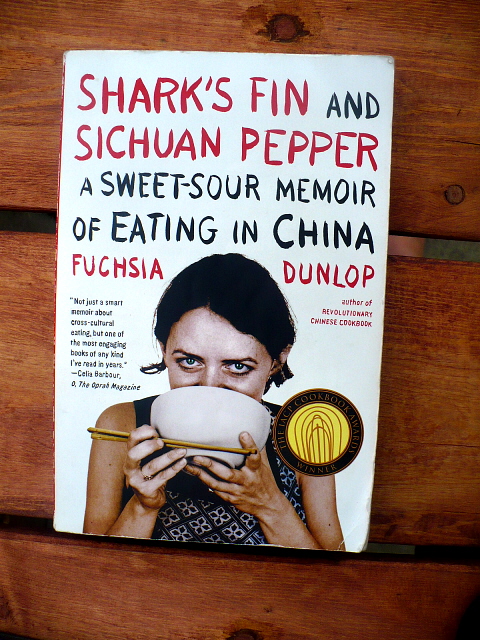
Book Review: "Shark's Fin and Sichuan Pepper", by Fuchsia Dunlop


I've said it before- stories of foreigners (usually Americans or continental Europeans) getting lost in Asia usually make for a good lure while still being very hit or miss. The same curiosity that compelled the protagonists often compels the prospective readers to keep turning pages. So much depends on the author's ability to not only have grown from the experience, but to be able to adequately express the depth of it in a manner a reader can identify with. No story survives without engaging characterization, and far too many tales of trial and tribulation simply fall flat and make the reader wish for their time back. 

...Looking at you, Clavell.

This time, with Fuchsia Dunlop's 2009 memoir Shark's Fin and Sichuan Pepper, it all turns out beautifully.

What might be the most important part of this book is the immersion factor. The background for the author's journey to the province of Sichuan is set within the first ten pages of chapter 1, and we the reader almost never hear about it again. That, to my mind, is just about perfect.

“Growing up in Oxford, studying in Cambridge, working in London, I had been propped up by  a string of academic and professional credentials that had seemed to define me in the eyes of  other people. But in China none of that mattered.”

That tells you everything you need to know about the author's past, really. And very little else is forthcoming. Someone who picks this book up will probably have some preconceived notions about what's inside, and the importance of imparting Just Enough Detail to enable the story is in many ways a defining factor of the memoir genre as a whole. The pages that follow are full to the brim with luscious and intensely intriguing detail of China as it was after Mao, but before the modernist eruption around the turn of the millennium.

Much of the book's magic comes from the thrill of discovery, so I won't delve into deep detail here. However, several of the author's tales come with recipes at the ends, and the ones I've tried have been superb. Speaking as a chef, the level of detail imparted in the storytelling is enormous, and any trained cook will be nodding knowingly as they turn the pages. There's nothing flowery about the storytelling where food is concerned, it's all very down to earth, realistic, and sensible.

The prose itself is also deeply thoughtful in its detail, giving a comprehensive mix of history, geography, family life, and all manner of Chinese customs past and present, deftly mingled through tales of the author's daily life in China. Her thorough exploration of first Sichuan then Hunan is sometimes tempered by sobering lessons from the natives, but that's to be expected. No story is all smiles.

For anyone wanting an engaging story, replete with information and rich with perspective, swing by the library and pick this one up for an entertaining read that's full of history, culture, and life lessons that will stick with you long after you're finished with the book. Perhaps it'll even inspire you to dig a little deeper into the bottomless well that is China.

Sunday, November 5, 2023

Cookbook Review: "Dorie's Cookies" by Dorie Greenspan


Come on, Dorie. Your book's title is Dorie's Cookies, so why is the first recipe a brownie?


Okay, now that I've got that out of my system, I can be serious.


It meets all the professional and casual expectations I consider important to a reader. Having worked alongside her in the past, I'm certainly not surprised. She's practical, reasonable, and fantastic to work with, all of which translates quite well into the book.


The first section is Techniques, Ingredients, and Gear, which is always important. Notions for getting the most out of your methods aren't something I turn down in a specialty cookbook like this. Minutiae on ingredients I can take or leave, but that's because I'm a professional too- the average home baker will likely find some useful tidbits. Equipment is vital- if you don't have the usual suspects, you'll know what you do need or want to get the job done. That's something cookbooks are notoriously bad at, and while baking-centric volumes have better odds, they still tend to be a little more “Well of course you need this- you're baking!”, which I don't like. Dorie doesn't do that.


Tools that remove variables are always a blessing in baking, so it's no surprise that most of them do that in some form or another. Some choices are obvious- the hand tools like like a rolling pin, a scale, or cookie scoops (just ice cream scoops with tiered measures). Then there's the heavies like the stand mixer or hand mixer, and the food processor. Most of the people looking at this book as something beyond a display piece will probably have most of this stuff. But there's also things like an oven thermometer (don't trust the number on the oven display), or what she calls 'cheaters', for your rolling pin. Elegantly simple- they're bands of set thicknesses to wrap around the edges of your rolling pin to insure your dough's also uniform. Don't underestimate the benefits, believe me.


Now we get to the proverbial meat of the book, wherein there's something for everybody. Lots of these I'd never see myself baking except to sell or send as gifts. Certainly not a problem though, there are plenty I'd happily bake every day (though of course I shouldn't- I like being the exact same weight I was in high school). But whether they're to my taste or not, they're thoughtfully constructed and intuitive to make. That's what really matters, right? No matter how delicious, the balance of “is this too much of a hassle” should always be a consideration, and Dorie does so from start to finish, sometimes so subtly you'd hardly notice.


I could happily run through the many chocolate, coffee, and almond variations and nothing else without a moment's regret- I actually stopped reading at one point to bake a recipe and see if it worked (Chocolate Chip Not-Quite Madelbrot, p. 104). Not only was it effortless, I cut it back by a third and it scaled perfectly. Recipes designed to scale up or down well are also rather uncommon, something she mentions here and there, so trusting one to halve or double isn't a big deal and there are usually notes if a recipe will make it difficult.


Several times throughout the book I'd be eyeing a cookie and think “Hmm, I wonder why she didn't add XYZ flavor/component”. Then I'd look at the next recipe or two and see one that did. Her flexibility with ingredients and flavor combinations is excellent, and serves quite nicely to fill out the book. (I've actually got another new baking book that does this very well too. Probably have a review on it by the end of the month.)


There's one thing that threw me a bit, but it's just perspective. There are a goodly number of savory cookie recipes in here, and my brain didn't immediately want to associate 'savory' with 'cookie', jumping instead to 'cracker', 'scone', or 'biscuit'. Don't let it get into your head, and nothing else will bug you.


Overall, this is an excellent volume on cookies. It give you what you need, what you want, and what you might try for yourself.

Saturday, September 9, 2023

Cookbook Review: 'Indian-Ish', by Priya Krishna


When looking at cookbooks, there are tons of things to consider- recipe count, accessibility, complexity, theme, time, place, readability, and more besides. Here's a subtle thing to check: "Who's the author? Who wrote the recipes?" If those names aren't the same, you might have a problem. This one, Indian-Ish? Bit of a problem. In rather smaller font behind Priya Krishna's name is the actual writer of the recipes. (Surprise! It's her mom!) While the book's tagline is 'Recipes and antics from a modern American family', that kind of subtle marginalizing of the primary source is upsetting. Culturally, historically, even practically, I get it. But that still doesn't make it correct.

The early pages have basics like spices, rice, quinoa, and potatoes- not uncommon for some styles of cookbook, and it doesn't hurt to have them here, even if it might feel a little patronizing. There's an interesting one on the technique of tempering spices and aromatics in oil (used as a finisher for many dishes), commonly known by its Punjab name of tadka/tarka/तङका here in the West. In this book it's referred to by the Hindi 'chhonk/छौंक', most likely to draw attention. Now this, I understand- it's a word that sounds funny to English speakers. It's more memorable, but it's also a somewhat different thing. Chhonk typically focuses less on dried whole spices, also including aromatics like chili, onion, curry leaf, even tomato (watery things!) in hot fat alongside spices, making a more complex, textural sort of finishing splash. The method and intent, though, are the same- creating a last-minute fresh, powerful flavor and aroma enhancer. In French cuisine it might be called a liaison finale.

Just save this, honestly.
Right after that comes a variation on something I made myself a long time ago- an ingredient flowchart for shortcutting Indian food. A clever quick-reference guide like this can be quite handy for the unfamiliar, even if the concept is as old as dirt. The notion of using certain static ingredients as 'building blocks' for delicious food is no stranger to a thinking cook, even if those ingredients vary widely all across the world. Given the book's likely audience, it's a wise inclusion of Mama Krishna's.

Now this book is here to tell a story just as much as it is to share culinary information, and the brilliantly colorful and stylized photographs couple delightfully with many of the shorter, simpler recipes to reflect that. Together they paint a picture of a family home rich in experiences and creativity, with just enough chaos to keep things inspired. Many of the recipes are beginner friendly dress-ups or simple tweaks in existing concepts, like the Lima Bean and Basil Dip (p.52) that's just 'hummus' via a different bean with some basil and lime instead of tahini and lemon. Building block concept, comparable substitute for the primary ingredient, simple flavor change. A well executed fundamental. A few seem to miss the mark- I don't recommend trying the Saag Paneer (p.83) without thinking carefully about seasoning first. Swapping the standard paneer for feta without a mention of the vast difference in salt content could easily lead to an inedible dinner. Keep that in mind and look closely at any recipes you want to try so you're not caught off guard.

Obnoxious on one side.
Uninformed on the other.
Everyone loses.

The flavor text, as it were, wanders widely. Topics vary, with things like fasting (Red Chile Potatoes, p.114), or traveling (Roti Roli Poli, p.135), and they often offer a good bit of color and context to flesh out what might seem like unexpectedly simple notions. A few, though, are heavy with gotchas likely to grate, like this one for Kichdi (p.158): 

"...But like many things in India consumed by small infants and ailing patients... white people in wellness circles have managed to co-opt the dish, acting as if they have unearthed this monumentous discovery... do all us brown people a favor and remember that kichdi was invented by Indians, not L.A. yoga instructors.". 

To give that kind of dismissive grief -particularly since it's hitting a sizable chunk of the book's probable audience- seems strongly self-sabotaging. I'm as guilty of the occasional White People Facepalm as any restaurant professional, but this book sometimes reads like it's trying to make a sale while giving prospective buyers the finger.

All the important fundamentals of a quality cookbook are here: the food's good, the recipes are relatively easy to execute, and there are how-tos for the entry-level stuff to take the fear away. Based strictly on the recipes and their photographs, it's a rock-solid read for all skill levels. As a whole though, it has a more dissonant feel. Food meant to bring comfort and happiness, shared by a voice that tries and fails to hide its insecurities behind eyerolls.

Saturday, September 2, 2023

Cookbook Review: 'Madhur Jaffrey's Instantly Indian Cookbook'


Missed the subheading, but it all worked out.
While browsing at the library, a cookbook I'd not yet read caught my eye. Nothing new exactly, but because I know Madhur Jaffrey's quite good at creating them, I took a second look. Her work typically offers informative expertise and thoughtful perspective from a voice in which you can hear the smile. Brevity, however, does not typically make the list, so I checked the unexpectedly slender volume out and brought it home to satisfy my curiosity. Upon closer examination, I realized it was by design. While the title has some ambiguity, the caption beneath marks it as meant for a very targeted audience: it's a 2019 Instant Pot cookbook. At which point I went "Whoops. Hmm..."

Throughout the course of her decades in food, Madhur Jaffrey has remained fairly constant in her message and her method, so this deviation toward a niche, nontraditional (if very useful) tool struck me as a trifle odd and very interesting. While I don't own an Instant Pot myself, I have lived and worked for many years alongside people who do, and was very much intrigued at how a food culture that so enthusiastically embraces the pressure cooker might make a more comprehensive use of what's touted as an all-purpose tool but often relegated to pressing one or two buttons and walking away. 

Amusingly, the book's introduction starts with what's essentially "RTFM"- a person can do so much more when they're using a piece of equipment they actually take the time to understand, and the Instant Pot is no exception. The intro ends with her trademark disarming charm. "Feel easy with the recipes and incorporate them into your lives in ways that best suit you. The foods in this book are very Indian. But you may eat them in as American a way as you like."

Recipes go into exacting but never superfluous detail about Instant Pot minutiae, including settings to use, cooking times, and whether to release pressure naturally or manually- even how long to wait before manually releasing, in some cases. Such fine-tuning tells me a significant amount of work and testing went into the recipes, making me more likely to trust them as written. I particularly like the Rajasthani Gosht (p.104) and the Saag Wali Moong (p.18). Most of the book seems covertly designed for low-budget and batch cooking as well, making the book more more of a draw for its intended audience. In addition, there are a few all-purpose techniques for using the Instant Pot such as boiling eggs, as well as some non-recipes like Rice Noodles (steaming and sautéing store bought Bánh Phở), but the latter feel more like just-in-case measures, and fit in with no fuss.

Most of the proper recipes themselves are both familiar and interesting, and there are a double handful of no-cook salads and chutneys to round things out, accented with pictures that are appetizing and unpretentious. However, the amount of the book that can be readily cooked in a single pan with naught but a little more time had me wondering about their provenance. Is this cookbook merely stocked with recipes taken from others and reworked to fit the mold? Probably. Does it matter? Not really. This book is about delicious food prepared with a specific product, and it delivers as promised. If you want to work backwards and convert the recipes in this book to fit conventional kitchen equipment though, there's nothing difficult about most of the transposing beyond adjusting the cooking times.

Overall, while Instantly Indian feels gimmicky, it does so with clearly defined purpose. It's neatly put together, well researched, and proffers exactly what it claims with enviably detailed precision. While not a book I'd use for its methods, several of its preparations are going to stick around in my head for regular eating. I couldn't ask for anything more from a functional cookbook.


Thursday, August 24, 2023

New Look at an Old Friend: Medium Raw


Very little food media has the knack of true timelessness. More than almost any other field, its styles and methods are transient, mutable, and very much identifiable. Author, origin, and year go a very long way, but then comes the style- be it of page layout, recipe choice, prose, or photography, so many cookbooks and memoirs read as though they were carved from the stone of their era in the business. Sometimes those are shining crystal, others polished marble, and still more might as well be kidney or gallstones. They all leave their marks.


I decided to take a look at an Anthony Bourdain book today. If anyone in living memory served to define a generation's perspective on the restaurant business and serve as its face, it would probably have been him. Five years dead now, he left behind two wives and many lovers, a daughter (who manages quite well to stay out of the spotlight), and a massive legacy as messy and fraught with conflict as his career.


Kitchen Confidential was one of those rare volumes that mixed knowledge with candor and pain in a manner that not only spoke to people, but enticed them to more. To sit down, shut up, and listen- and then think about what was said. About who said it, how they said it, and why. It was a story of a life indulged, squandered, wasted almost in its entirety, and then through blind luck and happenstance, unleashed upon us all.


But that tale of frustration, anger, and war stories from the culinary underbelly isn't the book I'm looking at here. It is instead the ten-years-on incarnation, Medium Raw.


Straight out of the gate, to set the mood, there's a lengthy bit on the notion of 'selling out', wherein Bourdain admits to having tried to uphold some fabricated sense of principles, of integrity. Aghast that people he thought of as heroes were willing to shill for nonsense, he listened to them. He learned perspective. For the big names, the empire builders, it's no longer personal. It's about those that depend on them- the staff of the restaurants and operations bearing a larger-than-life name. The beast must be fed, and it can't afford to be a picky eater. Perhaps out of sheer stubbornness, remembering how many years he spent bereft of anything remotely resembling principles, Bourdain still clung to those supposed notions, resisting the offers of endorsing things or people that would stick in his craw... until he had a daughter.


Almost everyone has a price- though in fairness, I've yet to find mine. My principles have kept me warm when I was cold, and assuaged the hunger when I was starving. But it's tireless work and constant suffering for no tangible reward, and it really shouldn't be.


There's a broad section on heroes and villains, which is always interesting when it comes from the heart and mind of someone so awash in the potential for vitriol. Some real surprises in this section for most people, I'd say, but the neat bit is that it sets the stage for the rest of the book, which does a superb job riffing on that theme. Bourdain offers a much more comprehensive perspective than would have been penned ten years past, rich in tone and robust in descriptives as he moves from food writing and food media to squabbles between industry titans, a deeply personal look at the most important invisible man in one of the greatest restaurants in the world, and then finishing out with a thoughtful, uncompromisingly harsh look at himself, his attitudes, and his future.


In one last nod to Kitchen Confidential, the final bit 'Still Here' gives briefs of some names and faces of his own checkered career. It reads quietly, apologetically, even mournfully, as it all slowly fades to black.


At the end of the day, Anthony Bourdain knew he was on borrowed time. Never once even dreaming that he could have met the requirements for the life his lightning-in-a-bottle book gave him, he merely did his best to do it justice. Sometimes he failed, and he never shied away from saying so. In spite of that, he kept at it, seeking the deeper, more personal feelings behind everywhere he went and everyone he met; an explorer knowing full well he was on a one-way trip, but determined to make the world a more informed, aware place in that familiar coarse way he'd always had.


We should be grateful. But we must also be worthy. He wasn't. But he knew that he wasn't, right down to the core of his being, and his work has always made that hard truth quite clear. In that regard at least, his integrity was beyond reproach. That, above all else, is what will always make him memorable.


Anthony Bourdain: 1956-2018.

Friday, August 18, 2023

"Cookbook" Review: 'Japanese Women Don't Get Old Or Fat', by Naomi Moriyama


Every so often, and more often than it ought, the world handles surges of interest in fad diets. From Atkins to grapefruit to paleo, GF, or whatever else, there always seems to be something new and kitschy to try in the search for a foolproof weight loss technique. This one's got a good tagline with a faint ring of truth. It's “Japanese Women Don't Get Old Or Fat”, by Naomi Moriyama.

This is the tale of the author, her husband, and their joint desire to share their experiences with Japanese home cooking. It made them feel healthier, happier, and more energetic, as well as giving them something to research- the reasons why it might have done so, and the history behind its development.

Opening with a wave of statistics about the Japanese lifestyle, the book touts their long lifespan, low rates of obesity and heart disease, low healthcare spending, and many other things. Always be suspicious when statistics are used as primers, because you can use said statistics to say virtually anything you want. 78% of statistics are made up on the spot because they sound so effective!

Obligatory attempt at Logos aside, the next pages turn to Pathos. First comes a dramatic monologue in honor of the culinary skill, creativity, and devotion of the author's mother. As any mother should, she gives all for her children, even if they don't always appreciate it at the time. After that comes a stern diatribe centering on how devoted the Japanese are to freshness- foods not only dated, but *timed* at the supermarkets, and even 7-11s stocking tasty, nutritious composed bento instead of prefab salads and suspect sandwiches. Then came a detour to detail the lifestyle of the glorious and rustic countryside, how everything is so vibrantly flavored, fresh, and full of life!

It all felt so transparent, so obviously fabricated- but I couldn't put my finger on why. Understanding came later.

While the “How to Start Your Tokyo Kitchen” chapter is potentially handy for the novice, the truth is that a good cook already knows what equipment they need to cook dinner, and if they don't have it, improvising isn't hard. Some of the later recipes call for Japanese-exclusive cooking gear, and the author tells you how to jury-rig one. Why not add those to the starting list of equipment in the early chapter- perhaps as a closer? That's a much more suitable time to detail where to get things a bit tougher to find.

Time and pages aplenty are spent emphasizing the importance of at-table garnishes and individual seasoning, in accordance with the Japanese tendency not to individually plate, but rather allow self-service from platters- a technique borrowed from China, just one of many.

It grows quite tedious when a portion of every recipe's ingredient list has 'to use at the table' as a caveat. Such a concept needs explaining one time. After that's done, make a separate section within the recipe for the garnishes and table condiments. It's entirely too easy to confuse an inexperienced cook by piling all the ingredients in one column without adequate direction. Considering the prospective readership, I find this to be a massive, glaring error.

A full third of the book is devoted to what's termed “The Seven Pillars of Japanese Home Cooking”. Fish, Vegetables, Rice, Soy, Noodles, Tea, and Fruit are the vaunted pillars, and while each subsection has several anecdotes and a handful of recipes, most of them are rather banal. For a book that centers around what they term 'healthy eating', the number of recipes that use, say, refined sugar as a fairly prominent ingredient is more than a little bothersome when looked at with a more professional eye.

To counteract that, there are stories aplenty that seek to emphasize the healthy, life-giving qualities of the other ingredients. There's an entire tale that centers around brown rice- the barest film of historical reference is given to the fantastic tale of Tomoe Gozen, then used to create a veneer of confidence in the nutritional superiority of brown rice. I agree with the sentiment entirely, but the method is shifty at best. Fiber isn't a miracle cure.

I admit, I wanted to like this book, but I just can't bring myself to. It's trying to be a cookbook and reference text, but it doesn't have enough recipes to be reasonable as the former, or enough hard nutrition facts to shore up the latter. Mostly it reads like a slapdash memoir, bereft of the aura of legitimacy and believability that often feels so necessary when creating a suitable referential work. It's a collection of vignettes, loosely tied together around the common theme of Japanese home cooking being healthy and happiness inducing. Likewise, the book seems to hedge its bet, making the premise sound like something a person has to try for themselves to see if it works as advertised, rather than to try it and expect results.

If you're willing to trust the book and the author's message, feel free to trust the recipes. Some of the 40-odd recipes sprinkled throughout the book might serve you well, and there is a recipe index in the back. I will not, however, offer any recommendations on which ones are worth trying. 

As for me though, I'm not going to bother. This goes straight back to the library- ideally in the fiction section where it belongs.

Sunday, August 13, 2023

Cookbook Review: "Classic Chinese Cuisine", by Nina Simonds


I've spent a good bit of my life loving Asian cuisine of all shapes and sizes, and I'll always say the most proportionally undervalued of them all here in America is actual Chinese cuisine. The history of its evolution here in America is intriguing but tragic, in that it's been stripped down, marginalized, and cheapened till it's nearly unrecognizable. I've researched long to find what might have been accurate attempts to preserve 'the real deal' in English-language literature through the latter half of the 20th century, and have managed to collect superb examples from the 60s and 70s. Next up- the 80s.

Nina Simonds' “Classic Chinese Cuisine” follows in the form and function of the volumes I've come across before- Lee Su Jan's 1962 masterpiece “The Fine Art of Chinese Cooking” and Madam Wong's 1977 “Long Life Chinese Cookbook”. Ms Simonds had been a writer for Gourmet magazine, and spent years of her youth training in professional kitchens in Taiwan, under master chefs that found mainland China both restrictive and dangerous. (All things considered, I don't blame them.)

As I read through the book, I couldn't help but pull my earlier reads of Dr. Lee and Madam Wong from my shelves and check some of the recipes I recognized against the equivalents in the other volumes. I wasn't disappointed, but instead intrigued. Many of them are virtually identical, some down to idiosyncrasies in language that led me to wonder if a translation or two might have been borrowed.

However, that's not the important part. Most vital is that the recipes don't change over multiple decades, and the historical citations are likewise the same. All three manuscripts are quite clearly drawn from the same core playbook, millennia old and held in deference enough not to be messed with.

The recipes themselves are laid out in a neat and organized manner, with the ingredients listed on the edges of the pages, split up by their purpose within the dish. The method of preparation is detailed in short paragraphs nearer the spine. Be warned, these require careful reading- not every dish has the necessary steps in an effective, efficient order.

I suspect that's a quirk of the extant Chinese culinary lexicon and ingredient prep priorities, though. That small quirk aside, I very much approve of the book's layout. There's a conversion chart at the end just before the index (American, British, and Metric), and each section of the book has any necessary tutorials either right at the beginning or beside the relevant recipe. Likewise, the historical elements that must compliment any serious book of  Chinese cookery are vibrant reading wherever they appear- and many of them are once again referencing the same people, times, and places as other books I've known in the past.

A well-researched manuscript, “Classic Chinese Cuisine” has earned a place on my shelf. It's a bit less worn out and much easier to read than the stalwarts of previous decades, but I feel safe and secure in referencing it just as readily for the quotes and stories as the recipes. Hunt this one down at your local library or used bookstore- you won't regret it one bit.

Thursday, July 20, 2023

Cookbook Review: "The Fine Art of Chinese Cooking", by Dr. Lee Su Jan


Modern cookbooks are a marvel of marketing and engineering. Awash with elegantly placed photos and pathos-steeped stories, all punctuated by just enough recipes to attempt at justifying the expense. They all too often see service as coffee table books or shelf decor, and little more besides. A shame.

As someone who takes cooking fairly seriously, what I look for in a cookbook is honestly quite simple. I want recipes, and I want the foundations from which they are built. The latter often includes solid amounts of context, be it from other recipes, the industry itself, or just history in general. I suppose you could get away with calling it 'flavor text'. Ahem.

The classic, best-known example is Julia Child's 1961 compilation, "Mastering the Art of French Cooking". Full to the brim with hundreds of recipes that have been deftly sectioned, each with a foreword to add background and useful bits of information about how to combine or modify the recipes for your audience of choice.

A book much more modern that does similar things is Tom Collichio's "Think Like A Chef". One of the cornerstones of my personal collection -when I had room to keep it, at least-, it teaches a home cook how to think about and prepare food in a manner akin to that of a professional while still imparting large amounts of useful information. These include flavor combinations, seasonality, and alternative or unconventional ways to use ingredients, all of which are fundamentals in a chef's arsenal.

But. We must return to the past, to make a vital note. There is another book. One that did everything Julia's book did for French food... but for China. This is "The Fine Art of Chinese Cooking", by Dr. Lee Su Jan. Published in 1963, it takes a no-nonsense approach to outlining the fundamentals of what has come to be thought of as contemporary Chinese-American cuisine. Realizing that the Kennedy-era American cook would never be able to find the wealth of authentic ingredients Chinese food needed, the author turned to recipes that used the basics. In doing so, he taught not only ways to prepare dinner, but the fundamentals of Chinese cooking technique, and the philosophy behind those techniques.

Seeing the pattern here?

There is virtually nothing of the author itself in the book, which tells strongly of his academic leanings. Most all modern cookbooks are heavy with anecdotes and vignettes to fill space and keep the casual buyer interested. The first third of this book has no recipes at all! But it lays the foundation of thousands of years of Chinese history, and reads most engagingly, each chapter discussing a new and vitally important part of Chinese cooking while providing background and encouraging further independent research.

Brilliantly informative even today, the book has upwards of two hundred recipes, a worthy note on its own considering the manuscript has all of 234 pages. Admittedly many of them are derivative, but that was almost certainly intentional. The underlying purpose was to show versatility- that a simple preparation can be nudged in many directions to please many audiences without harming flavor or legitimacy (I do try to avoid using 'authenticity', it being a painfully loaded word these days). Doing this would have given readers confidence to experiment and improve their recipes- something many cooks of the era would have hesitated to consider. Some of the recipes might be intimidating. Don't let them scare you. Everything I've tried works.

The primary drawback to this book is that it's A: hard to find, and B: dated. At many points the author makes substitutions for authentic ingredients, citing their inaccessibility- things like scallions, ginger, and sesame oil. Don't laugh! The modern cook has access to more ingredients than the author would ever have imagined.

Where I live in California, I have my pick of half a dozen Asian or Indian specialty grocery stores within a ten minute drive. in 1963's California, I would likely have had to drive from here to San Francisco's Chinatown to procure those same things! And that's in a state that's had a massive Asian population since the days of the intercontinental railroad. Imagine what a Midwestern housewife would have had to go through!

I recommend finding this book if you can. Try your libraries first- I haven't found it online except for a handful of secondhand copies. Really, though- any serious cook, anyone with an academic bent or a love of food, anyone who wants to learn how to cook Chinese style, and anyone who wants to appreciate how far the world has come in embracing other cultures will find this book a precious gem.

Monday, July 17, 2023

Cookbook Review: Madam Wong's Long-Life Chinese Cookbook


Very 70s, very simple and direct.
I often like to research old cookbooks. From an academic standpoint, it allows me to trace the history of food and cooking in a particular part of the world, and put various discovered works together to chronicle the gradual evolution of the culinary perspective. One of my other cookbook reviews (to be republished soon) dealt with the emergence of Chinese cooking in early 1960s America. I've discovered another volume, from the late 70s (1977, specifically), that both shows how far Asian influence had come, and also how far it had yet to go.

The book in question is "Madame Wong's Long-life Chinese Cookbook", and the huge societal change is clearly visible right under that title- "Recipes specifically designed for the West Bend Electric Wok". Fifteen years before, such a thing didn't exist anywhere in America, let alone in an English-language printed cookbook. Since many households had electric ranges that would make a wok a less than viable option, a simple and versatile tool that plugs into an outlet seems like it would have sold readily. (The fact that this book is still fairly easy to find also speaks to the popularity) On top of that, the draw of simple and exotic meals is strong- particularly those that could be prepared with only one vessel.

The author was a delightful old Szechuan lady who taught Chinese cooking in Shanghai, Hong Kong, New York, and California, even heading the department at UCLA at the time this book came out. A sprightly 71 at the time, she attributed her good health and long life to following Chinese cooking principles. And judging by her thousands of students over her forty years of teaching, and the fact that she herself lived to be 103, I suspected her skills and understanding might have held water. My reading and recipe testing within her book proved me very much right, and I hold this woman in highest regard.

Regarding the recipes, they're divided into sections by type and/or major ingredient. For example, there is a section 'Soups', but there are also sections such as 'Eggs', 'Pork and Lamb', and 'Sauces and Dips'. Each is full to the brim with recipes of varying types and difficulties, and many are found in some form on Chinese-American restaurant menus today. I noticed many duplicates from earlier Chinese cookbooks as well, and after a little recipe comparison, I found very little change. Some ingredients were altered as more authentic items became available in American supermarkets, but for the most part the dishes remained the same over the fifteen-odd years between the last major publication I have in my library.

Some of the directions in the recipes that may have been perfectly adequate at the time come across as vague. On a similar note, a number of the ingredients have the same problem: "Szechuan Preserved Vegetable"? "Soybean Pudding"? Even I was a little lost trying to figure out what some of the dishes had in mind. I thought I might have to knock this book a few steps down for being out of date and confusing, even to someone of my relatively high level of relevant skills.

Fortunately, that worry is deftly remedied in Chapter 16: Pantry Shelf and Storing Information. All the nonstandard ingredients are listed alphabetically in English, alongside the matching Chinese characters. After each name comes a thorough description, often including places they can be found and what the containers might look like when put up for sale, as well as an estimated shelf life. For those buying an exotic ingredient for a first time, this is an exceedingly valuable bit of information.

I can comfortably endorse this volume- and while I may not use the West Bend Electric Wok, I'll happily reference Madam Wong for as long as her pages hold together.