Wednesday, March 19, 2025

Book Review: "The Fortune Cookie Chronicles", by Jennifer 8 Lee


Back when I first penned this review, I decided I'd keep it simple- The Fortune Cookie Chronicles turned out to be an excellent book. It strives to answer some of the most common questions that come up when "Chinese Food" is a topic of conversation. As it happens, that's rather a lot, being that there are more Chinese restaurants in America than any two fast food chains combined.


Little factoids like that (Or that the 8 in her name is deliberate, but not for shock value- 8’s a lucky number in China.) are sprinkled all through the book- tidbits of passing interest backed up by research, and deftly tucked into the narrative. The storytelling laid beside the bald facts is poignant, stirring, and leaves definitive impressions at various levels of depth. Equal parts reporting, blog post, vignette, and amateur food critic, each section gives answers and information that not only serves to bolster your current understanding, but compound it as you read on. You'll think back as you near the end of the book and absentmindedly apply bits of info from the beginning to form a more complete picture. That's not as easy a trick to pull off as it sounds, considering your average college textbook. Likewise, it isn't something I say lightly.

Full disclosure though, a drafted manuscript that used similar research to address several of the book's major topics was sitting on my harddrive when this book came out. Jennifer beat me handily to getting things published (benefits of being a journalist and reporter rather than a chef I suppose), but in hindsight I don't mind a bit. She did an excellent job from start to finish.  Not speaking Mandarin or Cantonese myself, her net was a wider cast than mine, and I was very pleased at the surpassing thoroughness of her efforts- though some of my contacts in Japan might have been useful to her. Her list of notes and bibliographical references is also quite comprehensive- for those with a scholarly bent, that section alone is worth digging into. She's done a LOT of legwork, dredging up old manuscripts, translations, even court documents detailing the struggle of Asian-Americans to find citizenship and some measure of stability here in the United States. These days, I have to wonder how many more new versions of the very same struggles are going to be written and referenced in the months and years to come as the nation backslides into horrors thought banished for good.

There's one major problem with reviewing a manuscript as well constructed as this- most every enticing soundbite and succinctly distilled phrase has already found its way onto either the cover or the dust jacket.

So- if you've ever wondered who General Tso was, or why his chicken seems to be everywhere. If you're Jewish, and have memories of Chinese food every December around Christmas. If you've ever wondered where that Chinese Takeout Box came from, how the fortune cookie came about, or who wrote all those fortunes, or ever played the lucky numbers on the back. Any of that, plus all sorts of other satisfied curiosities work together to let me recommend this book with some real enthusiasm.

Sunday, March 16, 2025

St. Patrick's Day- a Primer, Perhaps?


I'll be the first to admit I don't know much about Irish food. It's not a part of the world that's on my culinary radar. Fair bit of what I do know isn't about restaurants, hotels, or other such things. It's details about farms, ranches, orchards, distilleries- the places the food and drink come from.

Looking at it from the outside, it seems to me like most of the detail-oriented expertise in Irish food gets spent before it hits the kitchen. Whether properly true or not, it certainly isn't a bad thing- lets the resulting prepared food showcase itself, in a manner akin to what you might see in Japan. The cultural emphasis on starting from the best place possible seems to fit well enough- there's not a lot done to most of of the ingredients because there's no need to do anything. Season properly, cook till appropriately tender and flavorful, and that's it. Even humble vegetables like cabbage can be absolutely delicious. I actually used to serve cabbage quarters as a side dish, cooked in rendered lamb fat till browned all over, then steamed just long enough to bring out the sweetness of the deeper-set leaves. A real delight.

Now, tomorrow is different. Nobody celebrating over here across the pond will be a historian wearing blue. They're all going to be garbed in green, gilded, glittery, and Guinnessed to the gills. Going out to eat will be easy, because any holiday-specific menus you're likely to see are likely to focus on a handful of relatively simple, familiar things. 

Corned Beef and Cabbage (Many don't corn their own.)

Bangers and Mashed (Colcannon if they're feeling ambitious.)

Cottage Pie (Shepherd's Pie if you're lucky and find a place serving lamb.)

Guinness Stew (Beef, maybe lamb. Mirepoix, turnips, parsnips, potato, peas.) 

Beer and whisky will be all over the place. Guinness will show up at both ends of the meal. Expect to see a lot of Guinness chocolate cake with Baileys Irish Creme frosting), or served as an admittedly excellent float with a scoop of vanilla ice cream and a drizzle of chocolate or coffee syrup. Whisk(e)y will also likely show up in whipped cream, caramel sauces, and anywhere else it can be shoehorned in. Not a bad thing. It's delicious. 

I suppose that's some of the idea why people get so enthused about it, but personally... I don't think the risk of going out is worth the bother. St. Patrick's Day is much like New Year's Eve, where everyone who doesn't normally party decides to give it a go. All too easily they party too hard, get careless, and then wake up somewhere they really shouldn't be. 

If you do go out, be careful, cautious, and be sure to shower before bed.

Sláinte!

Saturday, March 15, 2025

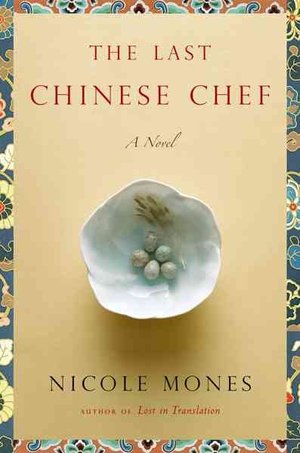
Book Review: 'The Last Chinese Chef', by Nicole Mones


How do you distill the culinary essence of 5000 years of history into a single short book?

<= Kinda like this. Note the cover blurb by Ruch Reichl- which at the time was shorthand for people in food media to take the book somewhat seriously, and to help goad dabblers into a purchase. (The other cover, seen below, is better.)

The Last Chinese Chef is one of those books where even if you don't know a thing about the subject matter to start, you will by the end. Moreso, you'll likely be grateful for it. The more you know to start with though, the better you'll probably like it. I'm definitely a fan of this approach, which the book handles well- I would recommend it to anyone who has a care for the relationship between food and culture, food and family, or food and more food! In that way it's a lot like a Fuschia Dunlop book, which makes perfect sense given both the subject matter and the intended perspectives.

Written by Nicole Mones, who also penned Lost In Translation (you may have seen the movie adaptation, and if not you should- it's not the easiest watch but Bill Murray gives a truly inspired performance), it weaves the story of a food writer and a great chef into an already bright tapestry of Chinese literature, art, culture, and food.

Much of the main story is outlined by parables and Chinese idioms which serve to flesh out the story, making it seem a liiiittle less thin than it would otherwise read. While I noticed, knowing full well who this book was marketed at, not everyone will notice or even care. There are a fair number of interesting coincidences in the book too, but that's just... sort of how literature works in settings like Hong Kong, Taiwan, and China anyway. It's really hard to break out of that whole 'Asian Mystique' trope, I've found.

This manuscript also bears a lot of underlying resemblance to Jennifer Lee's "The Fortune Cookie Chronicles", which I'll post a review for sometime this week. Not in execution of course, but rather in intent. Serving not only to educate, but to illuminate and fascinate the reader. It reveals answers to questions you might not know you had, and subtly brings out the desire to explore further even as it does.

There's one fairly robust caveat to the book though. It was published in 2007, and the story's then too- in the period leading up to the 2008 Beijing Olympic Games. Using that context, the story fits superbly- the journey of a chef alongside the journey of his homeland, both seeking greatness, belonging, and approval as what they were and what they strive to be. The deliberate time and place setting serves to highlight the past, analyze the present, and inspire hope for things yet to come. It was a superbly chosen parallel at the time, but looking at it now? The messages ring hollow indeed.

In spite of that one bit of bother, this book is well worth a read. It might be indirect in its messages, but they could never be called vague. Chinese style, by a non-Chinese.

And that's the point, really. Read it- you'll see what I mean.

Monday, March 3, 2025

Ugh. My head.


I have never minded the dentist. But I've been too poor for anything resembling viable dental care for... nigh on twenty years.

Root canals aren't so bad, I guess.

But I really wish that teeth weren't mistreated as Luxury Bones by the US imitation of a healthcare system. I'm a foodservice professional. I need my mouth in perfect condition. It should never be a worry for me. Instead, I'm probably going to go into an appalling amount of debt just to return to normalcy.

At this point in my life, my share of contribution is long since done. I am obliged provisioning in accordance with that. Debts are not things I owe- they are things I am owed.

I am likely to die before I ever manage to claim even the smallest fraction of them.

Monday, February 17, 2025

A quandary.


How does one explain to a well-known well-poisoner that the cause of their social isolation is staring at them in the mirror? 

Say, for example, you built an environment that gathered people together and evolved over a couple of decades into a happy, thriving community, all at essentially no cost.

Would you be happy you did something that enriched all those lives, that turned them into more than the sum of their parts? 

Or would you expect to be reliably fawned over, get upset and offended when it didn't always happen, eventually wipe out the whole thing in a fit of pique, then continue to complain after generously being invited into its replacement by those who gathered and made the place anew?

Damn good thing the member list survived, is all I'll say.

The psychological breakdown of this sort of aberrant behaviour is both interesting and topical. Insecurity induced selfishness accounts for a lot, and adding in a constant need for positive reinforcement, approval, validation, etc. is no real reach.

But to also be petty, vindictive, and passive aggressive, nettling people while pretending at victimhood just makes you seem a thorn in everyone's side.

Small wonder they're a pariah- could take their win from the tech money lottery and be content. But no.

Most of the people they're bitching about remain a community at least in part because they weren't so lucky, and benefit from mutual support in times of trouble. Don't think for a moment I'm not one of them, either. A couple years ago during the plague, the UV coating on my eyeglass lenses fragmented. Was like looking through a window spiderwebbed with cracks. Wearing them gave me splitting headaches every single day, and I can't see a damn thing without them. But I hadn't had a job since 2020 when the plague shut everything down- I was flat broke. So a friend from that group sent me a couple hundred bucks. Didn't ask, it just showed up one day.

There's a reason my Christmas/holiday card list is so long. I pay that generosity both back and forward as best I can. Even if it's only a couple times a year, it never hurts to remind people that you're thankful to have them in your life.

This sort of social ostracizing happens when you don't do that.

Or when you don't even know how.

Sunday, February 16, 2025

Book Review: "Being Dead Is No Excuse: The official Southern Ladies guide to hosting the perfect funeral", by Gayden Metcalfe and Charlotte Hayes


I’ll start by stating the obvious: This book is about a very different world from mine.  

But a world that is, in its own way, still familiar.

"Being Dead Is No Excuse: The official Southern Ladies guide to hosting the perfect funeral"

The title alone evokes a lot of things, centered around a tradition so insular and severe it borders on self-parody, and after reading... I'm not sure which side of the line it's on.

Now as someone who has been a chef, caterer, and many other things, event planning is not new to me. I’ve done weddings, birthdays, baby showers, book releases, orgies, and plenty of other interesting happenings- but funerals are one I haven't been tapped for. Now I’m not inexperienced with them by any means- I've been to… well, a lot. 

But there's a world of difference between going to one and handling one. You can in theory attend, grieve, and be gone, and think no more of it. However, not everyone does, or even can. To those who live in the Delta (shorthand for a sizeable chunk of the American Deep South), funerals are an experience like no other, one that's not unlike like surfing a wave, or carving down a slope of fresh powder. There's what's historically or traditionally expected, the variables and variations on the theme, and hidden under a thin veneer of Maybe lies the vast potential for comedic catastrophe.

Spoiling the book would be difficult, because so much of it has eased into the cultural subconscious. But if I attempt to add much in the way of detail, the mood will be off and the impact will suffer, so I'll keep it short.

One key component of funerals like this is something the book's authors are very dedicated to: community. It may not be pretty, and it may not even be nice. But it's theirs, and so it's worth fighting for. Not everyone can, will, or even should find their own community in which to thrive. But once you've got one? People do tend to dig in- and this book makes much and more of that tendency to great effect.

Another key made clear this book is Food. Funereal tradition is absolutely awash in food, so there are a lot of recipes in this book- enough that there's an index in the back. While many of these use the term 'recipe' as loosely as has ever been allowed, and quite deliberately so, Being Dead Is No Excuse goes into painstaking detail about the minutiae of the food and drink of the Southern funeral tradition. In no small part this is a cookbook full of funereal foods that could easily lead to a follow-up death- and they won't deny it for a second. Bring on the mayo and the cream of mushroom soup.

What is perhaps the most interesting part of it all is the underlying Christian denominational turf war- but I'll leave it at that because the joy is truly in the telling.

If you want a good laugh in the manner of Noises Off or perhaps My Fair Lady, this will do you right. I had my eyes closed and my face in my hands at many a point. Sometimes from the stories, sometimes from the snacks, but always with a smile.


Wednesday, February 5, 2025

Book Review: "Baking Yesteryear", by B. Dylan Hollis


Food media has done some Weird Shit in its time- this is known. But the notion of short form cooking with unusual or unexpectedly interesting recipes is about as common and timeless as it gets (or as much so as the internet gets, at least). That said, carving out a niche of one's own while doing something comparatively common is not easy, requiring a vast amount of luck, charisma, and apparently hair gel. 

Friends would reliably send me little clips of this fellow B. Dylan Hollis. I believe my first experience was "Ice Cream Bread", which I thought about for a second and went "Oh, it's going to end up like pound cake!" before hitting play  (I was right, for the record, and it's a pretty good one.) I looked with care, considered the source, and made a point to take notes on any of them I happened to see. Because it might be a gimmick, but it's a solid gimmick.

Random and/or retro recipes are inevitably a roll of the dice- something I know all too well, having no small amount of the same sorts of cookbooks he pulls from for many of his clips, and for much the same reasons. No small part of the fun of those recipes (and in this case watching him) is wondering of what's actually going to happen, and his endearing boyish charm more than covers the rest. He's the strawberry mimosa sort of twink whose hair I want to muss, then grin at the petulantly frazzled result before I pull him onto the couch to cuddle and watch a movie. If he happens to read this... blush away, kid.

But this is less about his online presence and more about his first book. Not too long before his second one will come out (it's due in May of this year) I decided to pull Baking Yesteryear from the library's shelf and give it a proper look. Yes, I'm a little late to the party, but that's the usual for a poverty-stricken professional like me. Besides, it's not like the recipes are new! Everything in the book is 20th century, and cuts out in the 80s somewhere. There's no real rush- they'll keep a little longer!

The intensity and enthusiasm Hollis has for desserts comes through in near every sentence of the book as readily as it does in his innumerable cooking and baking video clips. In his own words: "it dawned on me that each recipe writer was, in their own way, simply trying to share something that made them feel good... the sharing of a dessert and how to make it was an exercise in sharing happiness." It has the ring of truth to it, and contrived or not, brand or not, it's delightfully charming and as endearing as can be. 

His mien is more or less 'Favorite Grandson goes through Grandma's cookbooks as saucily as if he were a guest on The Golden Girls'. So... me, with more glitter and pizazz but far less precision and expertise. He himself also notes “I’ve often said I’m perhaps one of the only well-known food creators on the internet who hasn’t a clue what he’s doing”.

...I had to pause for a moment there and just laugh. 

And laugh and laugh and laugh. 

Such a dear sweet innocent boy. Small wonder his earnest words ring true!

Before the culinary trip through time begins though, there's a note or two. The recipes break from modern convention and call for salted butter unless otherwise specified. Recall that refrigeration is a 20th century thing, and remained somewhat rare till midcentury. Given butter's consistent expense, it was commonly sold salted to ensure longer shelf life. 

Hollis also hedges his bets here by offering terminology, common ingredients, measurement conversions, and his default cookie scoop (It's a #60, if you were wondering. Mine's a #50- I like them a little bigger.) as well as a superlative pie crust recipe and a basic vanilla buttercream frosting. Those last two likely in case some of the potential components of the recipes as written seem a touch too intimidating or equipment-prohibitive (Not everyone owns a candy thermometer or stand mixer, after all!). He mentions by name the Boiled Frosting, which sounds equal parts complicated and outlandish until you read it- it's basically just Swiss Meringue. Tricky, yes, but not outlandish at all. 

Baking Yesteryear's recipes go through most of the 20th century, decade by decade beginning with the 1900s. Every decade begins with no small amount of stage-setting, sprinkled with personal anecdotes, historical miscellany, and other cleverness to keep you reading and put you in the proper frame of mind for the time and place. Each is as unique as the recipes and circumstances from which they came, and read hungrily.

There are three sections that aren't decades though.

Dates: Something he adores but never seems to get enough of.

No-Bake: Because there were enough of them to justify a separate category.

Worst of the Worst: Explains itself, really. Whooooooo boy.

Bereft of ego, I'm probably one of the best possible people to review this sort of book. I know exactly what Dylan's talking about, where it's coming from, where his approach is coming from, and how to approach it. On every relevant level I understand the subtext- including how to jumble subtext right.

For someone who didn't do food for a living until now, he did a damn fine job with this book. The recipes are clear, succinct, and none too complicated. The concept is sound, the execution stellar, and the voice underneath as clear as can be. It's a good solid read that takes a lot of old things and brings them out of mothballs into the light again. It might not be everyone's cup of tea, and it's not the most useful as a practical cookbook, but as a compiled reference text, coffee table book, and way to get in touch with Grandma, it's a fine work indeed.